
RBS Test Price in Bangladesh: Complete Guide for 2025
A Random Blood Sugar (RBS) test is a simple yet crucial diagnostic tool used to measure glucose levels in the bloodstream at any random time, regardless of when the patient last ate. This test helps healthcare providers screen for, diagnose, and monitor diabetes and other conditions affecting blood sugar regulation. In Bangladesh, RBS test prices typically range from 60 to 225 BDT, varying based on the healthcare facility, location, and quality of service. This comprehensive guide explores everything you need to know about RBS test prices in Bangladesh, including preparation requirements, interpretation of results, and pricing across various hospitals.
What is a RBS Test?
A Random Blood Sugar (RBS) test, also known as Random Plasma Glucose test or Casual Blood Glucose test, is a diagnostic procedure that measures the concentration of glucose in your blood at any random time, irrespective of when you last consumed food1.
Unlike fasting blood sugar tests that require 8-12 hours of fasting, an RBS test can be performed at any time of day without any special preparation. This makes it a convenient initial screening tool for diabetes and other glucose metabolism disorders.
The test works by measuring the amount of glucose (sugar) present in a blood sample. Glucose is the primary source of energy for your body’s cells, and its levels in the bloodstream are regulated by insulin, a hormone produced by the pancreas. When this regulation mechanism fails, it can lead to abnormally high or low blood sugar levels, indicating various medical conditions.
RBS testing is particularly valuable as a quick screening method for diabetes mellitus, but it’s often used alongside other tests like Fasting Blood Sugar (FBS) and Glycated Hemoglobin (HbA1c) for more comprehensive diabetes assessment and management.
When is a RBS Test Recommended?
Healthcare providers typically recommend an RBS test in various clinical scenarios:
- Diabetes Screening: For individuals with risk factors such as family history, obesity, high blood pressure, or high cholesterol1.
- Diabetes Symptoms: When patients present with classic symptoms like:
- Excessive thirst (polydipsia)
- Frequent urination (polyuria)
- Unexplained weight loss
- Blurred vision
- Fatigue
- Slow-healing wounds
- Emergency Situations: To quickly assess blood sugar levels in unconscious patients or those experiencing acute illness.
- Pregnancy Monitoring: To screen for gestational diabetes, especially in high-risk pregnancies.
- Medication Monitoring: For patients taking medications that can affect blood sugar levels, such as corticosteroids.
- Routine Health Check-ups: As part of general health assessments, particularly for individuals over 45 years of age.
Doctors use RBS test results primarily as an initial screening tool. If the results are abnormal, they typically order additional tests like Fasting Blood Sugar (FBS), Oral Glucose Tolerance Test (OGTT), or HbA1c to confirm a diagnosis and determine appropriate treatment.
RBS Test Preparation
One of the main advantages of the RBS test is that it requires minimal preparation:
Before the Test:
- No fasting is required
- You can eat and drink normally before the test
- Continue taking your regular medications unless specifically instructed otherwise by your doctor
- Inform your healthcare provider about all medications you’re currently taking, as some can affect blood sugar levels
During the Test:
- A healthcare professional will clean a small area on your finger or arm with an antiseptic
- A small needle or lancet will be used to obtain a drop of blood
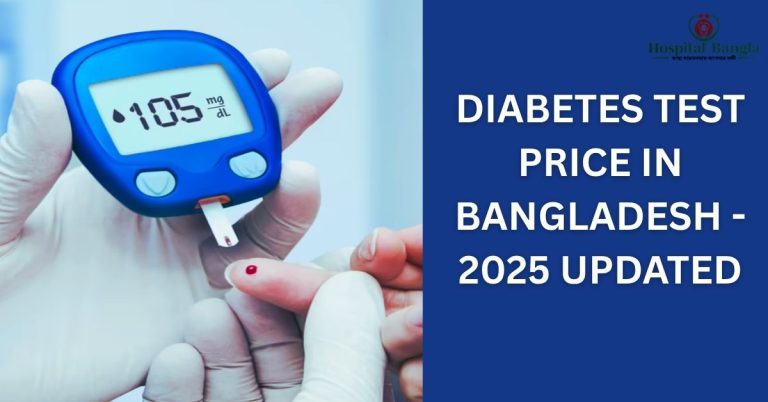
- The blood sample is placed on a test strip and inserted into a glucose meter, or collected in a tube for laboratory analysis
- The entire process typically takes less than 5 minutes
After the Test:
- You can resume all normal activities immediately
- Results are usually available within minutes if using a glucose meter, or within a few hours if sent to a laboratory
- Your healthcare provider will interpret the results and discuss any necessary follow-up
RBS Test Price List in Government Hospitals in Bangladesh
Government hospitals in Bangladesh offer RBS tests at subsidized rates, making them more affordable for the general population. Here’s a list of major government hospitals and their current pricing for 2025:
| Hospital Name | Location | RBS Test Price (BDT) | Contact Number |
|---|---|---|---|
| Dhaka Medical College Hospital | Dhaka | 60 | Not available |
| Bangabandhu Sheikh Mujib Medical University | Dhaka | 60 | Not available |
| National Institute of Laboratory Medicine and Referral Centre | Dhaka | 60 | Not available |
| Sir Salimullah Medical College Hospital | Dhaka | 60 | Not available |
| Shaheed Suhrawardy Medical College Hospital | Dhaka | 60 | Not available |
| Chittagong Medical College Hospital | Chittagong | 60 | Not available |
| Rajshahi Medical College Hospital | Rajshahi | 60 | Not available |
RBS Test Price List in Private Hospitals in Bangladesh
Private hospitals and diagnostic centers in Bangladesh offer RBS tests at varying price points, often with additional services like home sample collection or faster results. Here’s a list of prominent private facilities and their pricing for 2025:
| Hospital/Diagnostic Center | Location | RBS Test Price (BDT) | Contact Number |
|---|---|---|---|
| Popular Diagnostic Centre Ltd. | Multiple branches | 150-170 | Not available |
| Ibn Sina Diagnostic & Consultation Center | Multiple branches | 150-225 | Not available |
| Labaid Diagnostics | Multiple branches | 150-170 | Not available |
| Epic Hospital | Dhaka | 150 | Not available |
| Dhaka Community Medical College Hospital | Dhaka | 170 | Not available |
| Square Hospitals Ltd. | Dhaka | 150 | Not available |
| United Hospital Limited | Dhaka | 150 | Not available |
| Medinova Medical Services Ltd. | Multiple branches | 150 | Not available |
| Delta Hospital Ltd. | Dhaka | 150 | Not available |
| Anwer Khan Modern Hospital Ltd. | Dhaka | 150 | Not available |
Understanding RBS Test Results
Interpreting RBS test results requires understanding the normal and abnormal ranges of blood glucose levels:
Normal Range:
- For non-diabetic adults: Less than 200 mg/dL (11.1 mmol/L), regardless of when they last ate
- For children: 70-150 mg/dL (3.9-8.3 mmol/L)
Abnormal Results:
- High Blood Sugar (Hyperglycemia):
- 200 mg/dL (11.1 mmol/L) or higher suggests diabetes, especially if accompanied by symptoms
- Between 140-199 mg/dL (7.8-11.0 mmol/L) may indicate prediabetes or impaired glucose tolerance
- Low Blood Sugar (Hypoglycemia):
- Below 70 mg/dL (3.9 mmol/L) is considered low and may indicate conditions like:
- Excessive insulin administration
- Certain medications
- Liver or kidney disorders
- Hormonal deficiencies
- Malnutrition
- Below 70 mg/dL (3.9 mmol/L) is considered low and may indicate conditions like:
Factors Affecting Results:
- Recent food intake (especially carbohydrates)
- Physical activity level before the test
- Stress or illness
- Medications (corticosteroids, beta-blockers, certain antipsychotics)
- Time of day (due to natural fluctuations in blood sugar)
It’s important to consult a healthcare provider for proper interpretation of your results, especially if they fall outside the normal range. A single abnormal RBS result is usually not sufficient for diagnosis and requires confirmation with additional tests like FBS, OGTT, or HbA1c.
Frequently Asked Questions
1. How accurate is the RBS test for diagnosing diabetes?
While the RBS test is useful for screening, it’s not definitive for diagnosing diabetes. A single reading of 200 mg/dL or higher, along with diabetes symptoms, may suggest diabetes, but confirmation typically requires additional tests like FBS, OGTT, or HbA1c. The accuracy is improved when used in combination with these other tests.
2. How long does it take to get RBS test results?
Results are usually available within minutes if using a portable glucose meter (glucometer) or within a few hours if the sample is sent to a laboratory. Many diagnostic centers in Bangladesh provide results on the same day.
3. Is the RBS test covered by health insurance in Bangladesh?
Most health insurance plans in Bangladesh cover basic diagnostic tests like RBS. However, coverage varies by provider and policy. It’s advisable to check with your insurance provider about specific coverage details.
4. How often should I get an RBS test?
For individuals without diabetes or prediabetes, screening is typically recommended every three years after age 45. Those with risk factors may need more frequent testing. People with diagnosed diabetes may need to monitor their blood sugar daily or multiple times per day, as advised by their healthcare provider.
5. What’s the difference between RBS, FBS, and HbA1c tests?
- RBS (Random Blood Sugar): Measures blood glucose at any time, regardless of when you last ate.
- FBS (Fasting Blood Sugar): Measures blood glucose after at least 8 hours of fasting.
- HbA1c: Measures your average blood glucose levels over the past 2-3 months.
Each test has specific advantages and is used in different clinical scenarios, often complementing each other for comprehensive diabetes management.
6. Can I eat before an RBS test?
Yes, you can eat normally before an RBS test. In fact, the test is designed to measure your blood sugar level regardless of when you last ate. However, your doctor will consider your recent food intake when interpreting the results.
Conclusion
The Random Blood Sugar (RBS) test is a valuable tool for screening and monitoring blood glucose levels, serving as an important first step in diabetes detection and management. In Bangladesh, the test is widely available at both government and private healthcare facilities, with prices ranging from 60 to 225 BDT in 2025.
When considering where to get your RBS test, it’s worth comparing prices across different facilities while also factoring in convenience, reliability, and additional services offered. Government hospitals provide the most affordable options, while private facilities may offer added conveniences like home sample collection or faster results.
Remember that while the RBS test is an important diagnostic tool, it should be interpreted in the context of your overall health and other test results. Always consult with a healthcare provider to understand your RBS test results properly and determine if additional testing is needed. Regular monitoring of blood sugar levels, particularly for those at risk of diabetes, is an essential part of maintaining good health and preventing complications associated with blood sugar disorders.